top of page

Lithium Grease Formulation
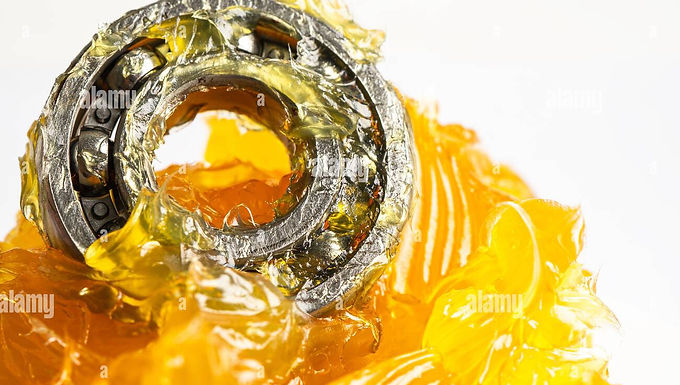
Lithium Grease: General Overview, Composition and Formulation
Lithium grease is a widely used multipurpose grease known for balanced mechanical stability, temperature capability and water resistance. Conventional lithium soap is commonly developed from lithium hydroxide and 12-hydroxystearic acid in a selected base oil.
The formulation is adjusted for bearing speed, load, operating temperature, relubrication interval, NLGI grade and required EP performance. Smoothness, colour, pumpability and oil release are also controlled during development.
General Composition of Lithium Grease
- COMPONENT | PURPOSE
Base oil
Mineral or synthetic oil providing the lubricating film and controlling speed-temperature behaviour.
Lithium soap thickener
Provides structure, mechanical stability and useful resistance to heat and water.
Antioxidant
Reduces oxidation of the oil during storage and service.
Rust inhibitor
Protects ferrous surfaces from corrosion.
Antiwear and EP additives
Improve wear control and load carrying for EP grades.
Tackifier or polymer
Adjusts adhesion, texture and mechanical behaviour.
Dye or solid lubricant
Used for coloured or application-specific products.
Final composition depends on the required NLGI grade and performance specification.
Production Process and Lubechem Technical Support
- TYPICAL MANUFACTURING SEQUENCE
1. Charge the initial base-oil portion.
2. Conduct controlled lithium saponification.
3. Remove water and develop the soap at the required temperature.
4. Add finishing oil in planned stages.
5. Cool under controlled mixing to develop texture.
6. Add temperature-sensitive additives and dye.
7. Mill or homogenise the grease.
8. Deaerate, filter where necessary and test.
LUBECHEM SUPPORT
• Multipurpose and EP formulation development
• NLGI 0, 1, 2 and 3 grades
• Composition, SOP and batch documentation
• Remote laboratory trial guidance
• Pilot and commercial production support
• Cost optimisation and raw-material alternatives
• Batch correction and plant troubleshooting
Typical Specifications, Testing and Applications
- TYPICAL DEVELOPMENT TARGETS
NLGI grade: 0–3
Worked penetration: ASTM D217
Dropping point: commonly about 175–205°C, formulation-dependent
Base-oil viscosity: ASTM D445
Water washout: ASTM D1264
Four-ball wear: ASTM D2266
Four-ball weld load: ASTM D2596 for EP grades
Rust prevention: ASTM D1743
Copper corrosion: ASTM D4048
Oil separation: ASTM D1742 or equivalent
COMMON APPLICATIONS
• Wheel bearings and chassis points
• Electric motors and pumps
• Conveyors and industrial bearings
• Agricultural machinery
• Construction equipment
Final claims must be verified on the approved production batch.
Lithium Grease: Frequently Asked Questions
- Can different NLGI grades be developed?
Yes. Thickener level, oil balance and processing are adjusted for the required grade.
Can lithium EP2 grease be developed?
Yes, with compatible EP and antiwear additive technology.
Will Lubechem provide complete raw-material quantities?
The agreed consultancy scope can include a complete composition and batch sheet.
Is remote manufacturing support available?
Yes. Laboratory and production batches can be guided through video calls.
Can lithium grease be mixed with another grease?
Compatibility must be tested before changeover because mixing can alter consistency and performance.
Get in Touch with Us
If you found this information useful and would like to discuss further, please contact us. We are committed to providing high-quality solutions tailored to your specific needs.
bottom of page